Selecting between active and passive RFID systems is a foundational decision that shapes the efficiency of any modern asset tracking operation. An active RFID reader is designed to capture transmissions from battery-powered tags across broad detection zones, while a passive RFID reader sends RF energy through its antennas and receives the tags’ backscattered responses.
The distinction affects frequency and protocol compatibility, antenna configuration, read-zone design, communication interfaces, installation density, and maintenance planning. This guide compares active and passive RFID systems, including their tags, readers, communication methods, read ranges, deployment requirements, and typical applications. RSTC’s RS-AR01 active reader and RS-PR03 and RS-F905 passive UHF readers are used as practical hardware examples.
What Is the Difference Between an Active RFID Reader and a Passive RFID Reader?
An active RFID reader primarily monitors the air interface for signals sent by compatible active tags. It identifies the tag, measures signal strength when supported, filters repeated messages, and forwards the data to the host system. This architecture is suited to wide-area presence detection and frequent location updates.
A passive RFID reader performs two RF tasks: it transmits energy to activate compatible tags and receives their backscattered responses. Its practical performance depends on output power, antenna gain and polarization, port count, cable loss, tag orientation, surrounding materials, and reader settings.
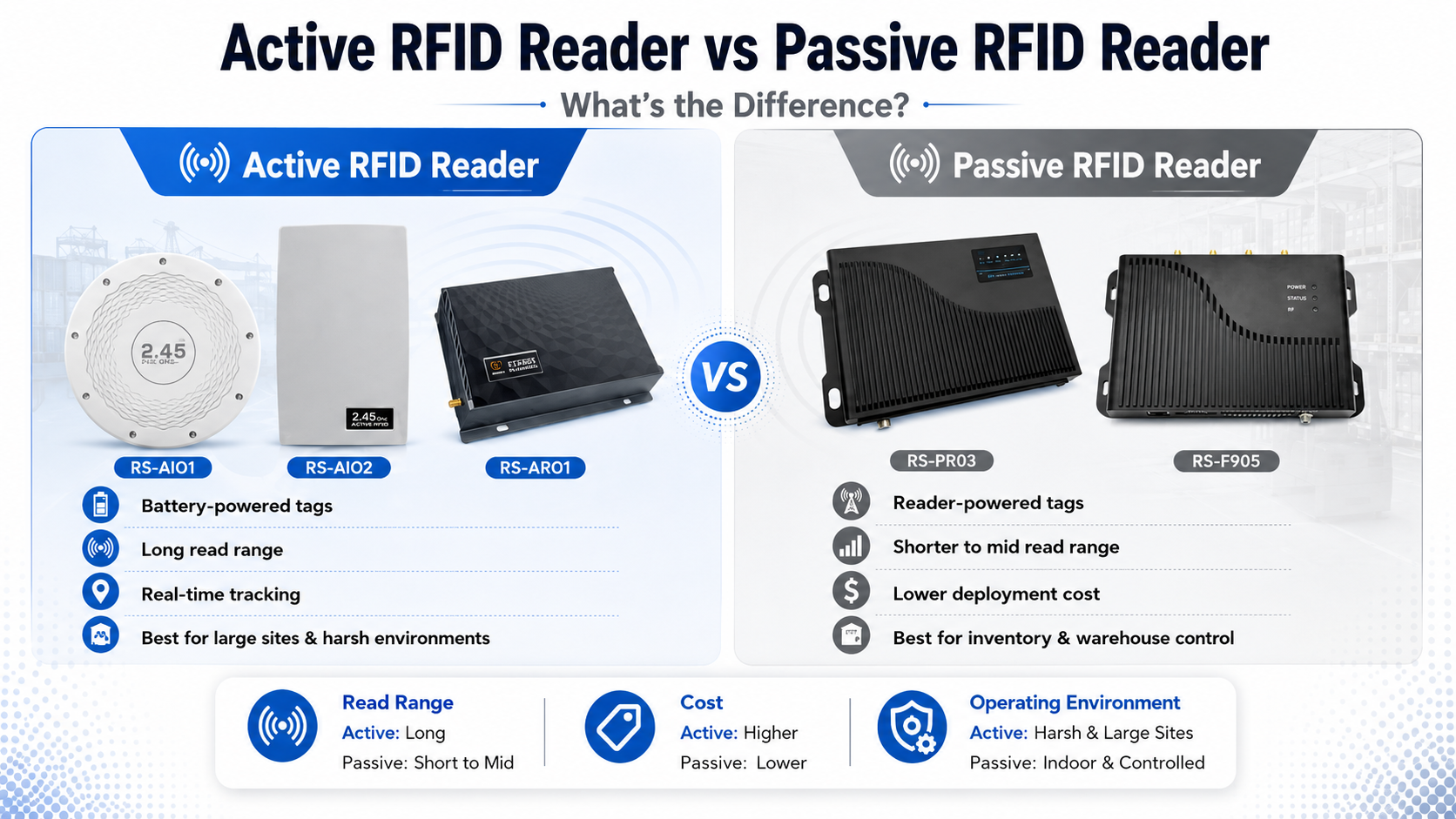
The two reader types are not interchangeable. RSTC’s RS-AR01 operates at 2.4–2.48GHz with a private protocol, whereas passive UHF readers such as RS-PR03 and RS-F905 operate in regional 865–928MHz bands and use EPC Class 1 Gen 2 (ISO 18000-6C). The reader, tag, antenna, and local frequency plan must therefore be selected as one compatible system.
How Does an Active RFID Reader Work?
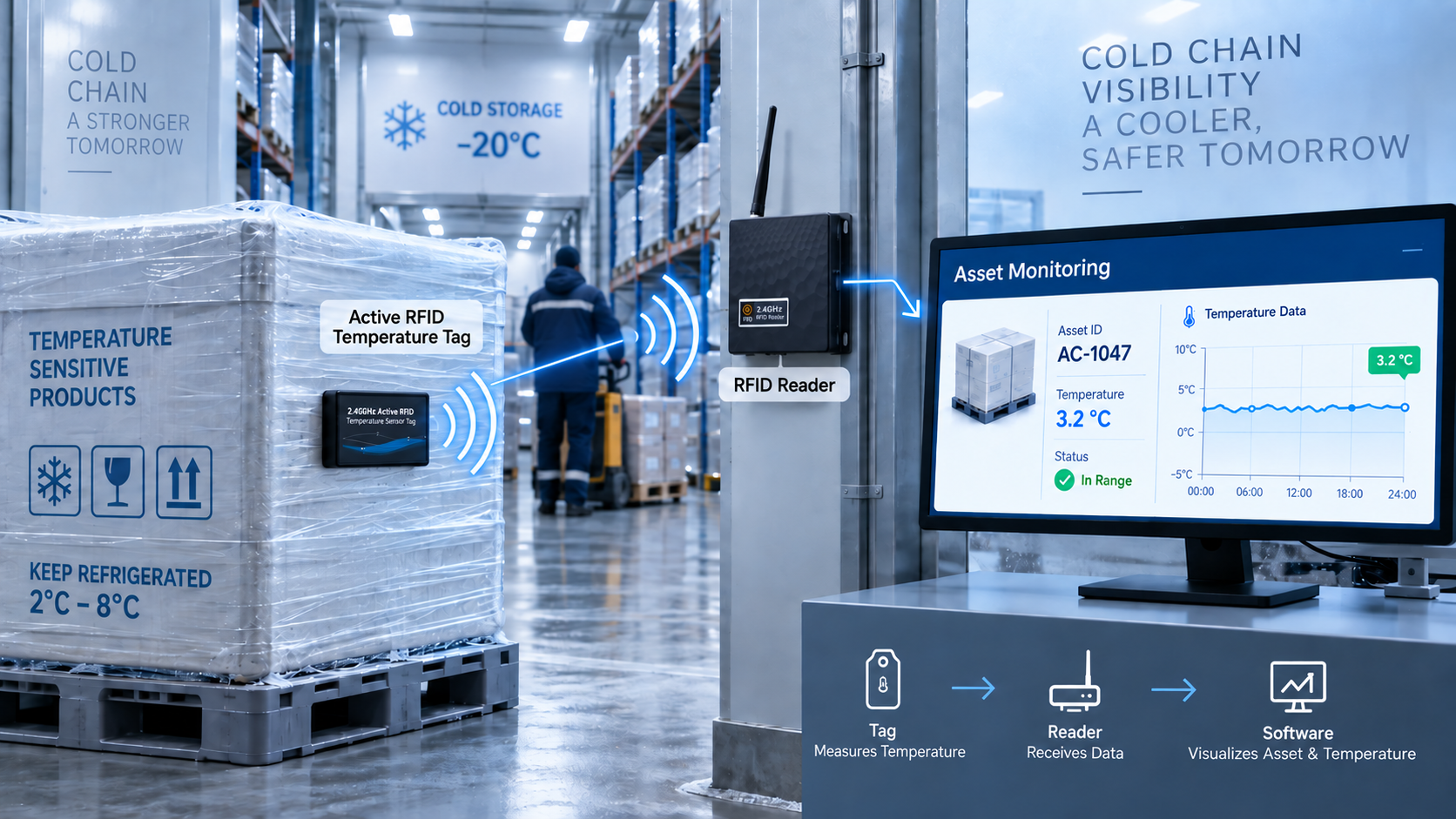
In an active RFID system, battery-powered tags broadcast signals to compatible active RFID readers
An active RFID reader works by continuously listening for signals that battery-powered tags broadcast on their own. Because the tag does the transmitting, the reader doesn’t need to energize anything first. Therefore, an active reader can pick up a signal the moment a tagged asset enters its detection zone, even across a wide yard or multi-floor facility.
Why Do Active Tags Need Their Own Battery?
Active tags need a battery because they must generate their own radio signal rather than reflect one back. This onboard power lets the tag transmit continuously or at set intervals, which supports real-time location tracking. However, that same battery typically lasts three to five years before requiring replacement, so active systems involve a small ongoing maintenance cost that passive systems avoid.
When Should You Choose an Active RFID System or a Passive RFID System?
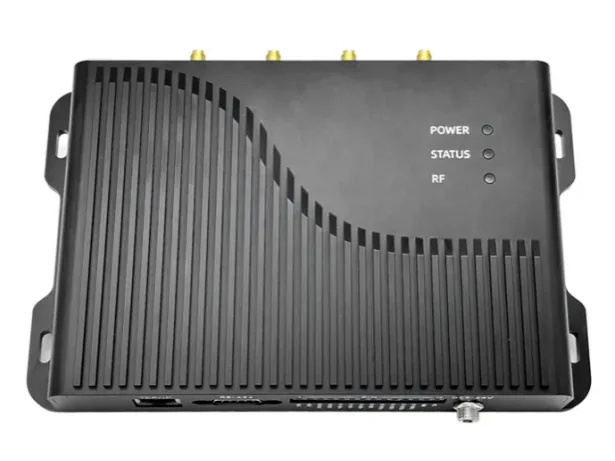
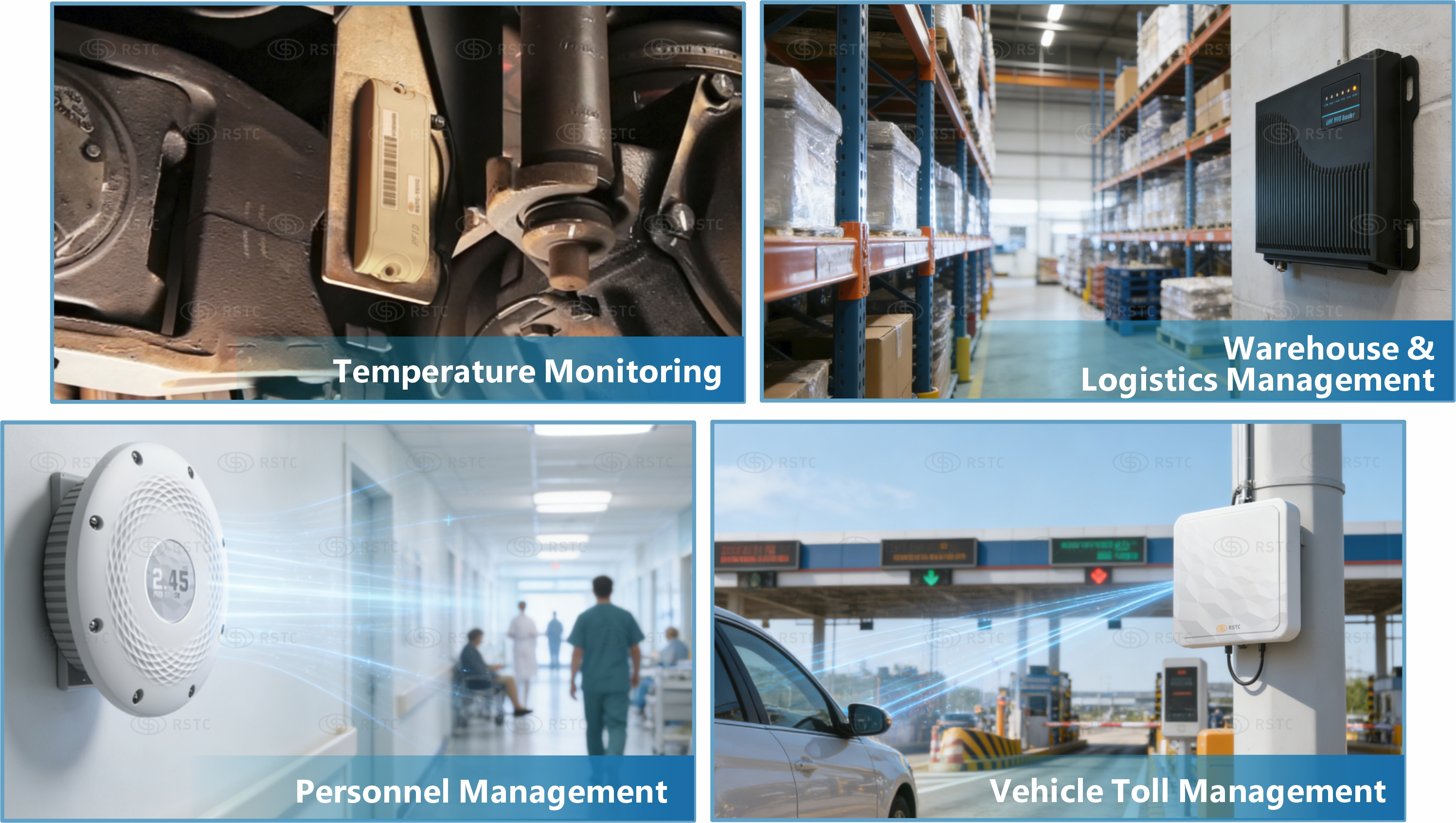
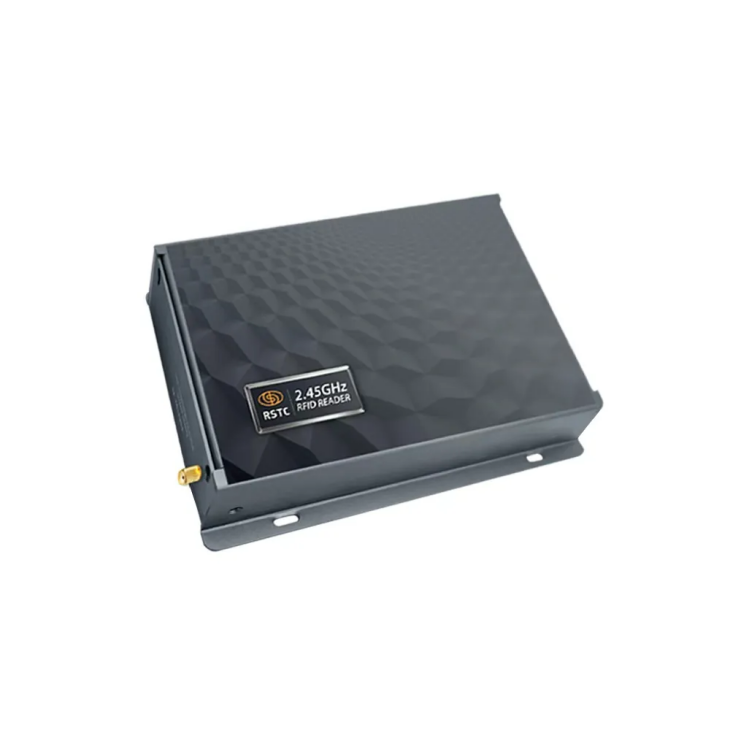
Choose an active RFID system when the project requires broad detection coverage, frequent presence updates, and identification of assets moving across yards, campuses, transportation sites, or large industrial facilities. The RS-AR01 onmi-drectional fixed reader is suitable for these applications because it supports a software-adjustable reading distance of up to 180 meters under outdoor line-of-sight conditions and can identify up to 200 tags per second. Its omnidirectional antenna configuration also helps create a wider detection zone without requiring the reader to be positioned close to every tagged asset.
Choose a passive RFID system when tagged items pass through controlled reading points or when large volumes of low-cost tags must be identified at portals, shelves, gates, production lines, or workstations. In these deployments, the reader must transmit energy to activate nearby passive tags, so antenna direction, installation position, interference control, and read-zone containment are usually more important than achieving the longest possible open-area reading distance.
How Far Can Active RFID Systems Track Assets?
Active RFID systems can often detect tagged assets from roughly 100 to 300 feet away, although actual range depends on the tag, reader, antenna configuration, installation environment, and system settings. This gap exists because active tags broadcast with their own power, while passive tags depend entirely on the reader’s transmitted energy bouncing back. As a result, active systems suit open yards, parking facilities, and multi-building campuses where passive range simply falls short.
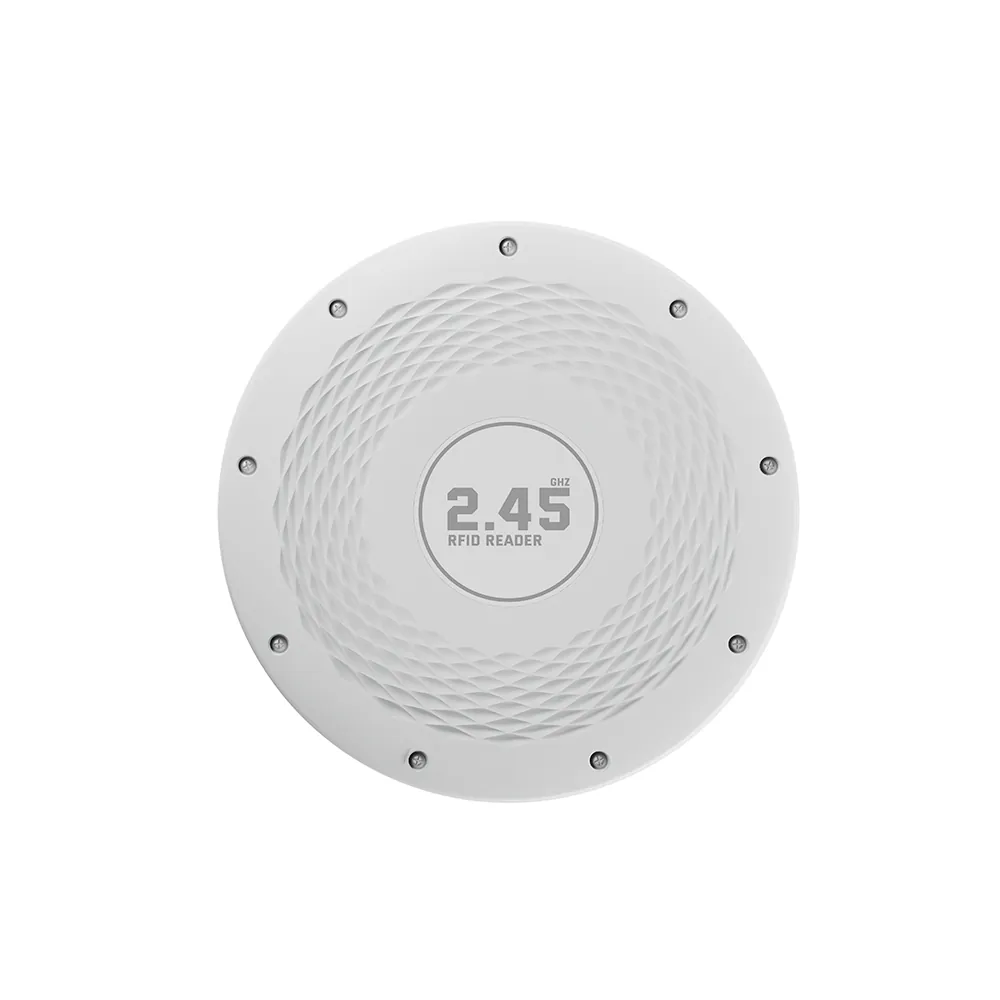
Reader design also affects how far a signal travels in practice. RSTC’s RS-AI01 fixed outdoor reader uses a circular, omnidirectional design rated IP67 for waterproofing, with a software-adjustable range up to 120 meters and an operating window from -40°C to 60°C. That kind of build matters for rail yards or construction sites, where the reader sits outdoors year-round.
For installations needing an even longer reach, the RS-AI02 active integrated reader includes a built-in 15dBi antenna and a software-adjustable reading radius up to 180 meters in open areas. Because the antenna is integrated, installers skip a separate antenna purchase and cabling step, which simplifies setup at checkpoints or facility perimeters.
Active vs Passive RFID — Which One Fits Your Industry?
The right choice between active and passive RFID depends on what you’re tracking and how often you need updated location data. Warehouses moving thousands of small items typically lean on passive tags because the per-tag cost stays low at scale. Rail operators and healthcare facilities, however, often need to know an asset’s location continuously, not just at checkpoints.
Industry | Typical Choice | Why |
Warehouse inventory | Passive | Lower per-tag cost, high tag volume |
Railway safety monitoring | Active | Continuous outdoor tracking, harsh conditions |
Healthcare asset tracking | Active | Real-time location of mobile equipment |
Retail item-level tracking | Passive | Small tag size, no battery maintenance |
Consider a railway depot that needs to monitor train locations across an open yard around the clock. Because passive tags can’t broadcast on their own, they would require a reader to pass within close range of every rolling stock, which isn’t practical at that distance. An active system solves this by having each tagged rolling stock continuously announce its position to readers positioned along the yard.
Cost is the other half of the equation, and it cuts both ways. Active tags cost more per unit because they include a battery and transmitter circuit, but the reduction in manual scanning labor often offsets that expense for large, spread-out operations. Passive tags cost less individually, which makes them practical when a business needs to label hundreds of thousands of low-value items, such as retail garments.
Facility size is usually the deciding factor when industry needs overlap. A mid-size warehouse with a single loading dock might do fine on passive tags alone, because workers can scan pallets at a fixed checkpoint without missing data. A sprawling railway depot or hospital campus, on the other hand, has too much ground to cover for checkpoint scanning to keep up, which pushes the decision toward active hardware.
Conclusion
Active and passive RFID solve different problems, so the right pick depends on your tracking radius and update frequency. If your assets stay within a few feet of a checkpoint and budget per tag matters most, passive RFID is the practical fit. If your assets roam across a wide outdoor site and you need near-constant visibility, active RFID earns its higher per-tag cost back through reduced manual scanning.
Before selecting an RFID system, it helps to map the facility layout, asset movement, required update frequency, read zones, tag volume, and maintenance expectations. Teams weighing both tag types can review RSTC’s RFID reader lineup to compare fixed, integrated, and dual-mode options side by side. Businesses planning an RFID deployment can contact us to discuss suitable hardware configurations and identify the most effective solution for their operational requirements.