Industrial manufacturing environments expose workpieces, production fixtures, and equipment to heat, metal interference, moisture, chemicals, and mechanical impact. Standard radio frequency identification (RFID) tags may not withstand these conditions or maintain reliable identification throughout the production process.

Choosing high temperature resistant RFID tags therefore requires more than checking a maximum temperature rating. Buyers must consider how long a tag is exposed to heat, whether it needs to operate during heating, what material it will be attached to, and whether the RFID system can read it reliably.
This guide explains the main selection criteria, practical testing methods, and industrial RFID tag options available from RSTC.
What Temperature Requirements Should You Consider?
The first step is to distinguish between operating temperature and survival temperature. These two specifications describe different conditions and should not be treated as interchangeable when selecting high temperature resistant RFID tags.
Operating Temperature vs. Survival Temperature
Operating temperature refers to the temperature range in which an RFID tag is designed to function. Survival temperature refers to the temperature it can withstand under specified exposure conditions without permanent damage. A tag may survive a higher temperature while temporarily unable to provide reliable RFID readings.
For example, an industrial workpiece may pass through a heating station before cooling down at the next production stage. If the tag only needs to identify the workpiece after cooling, its requirements differ from those of a tag that must be read while the workpiece is still hot.
Before comparing products, check these specifications:
- Continuous operating temperature: The temperature range for normal operation.
- Survival temperature: The highest temperature the tag can tolerate under specified conditions.
- Exposure duration: How long the tag can remain at elevated temperatures.
- Temperature cycling: Whether repeated heating and cooling affect its structure or performance.
Heat Exposure Duration and Thermal Cycling
Maximum temperature alone cannot determine whether a tag is suitable for an industrial process. A short exposure to intense heat and continuous operation at a moderately elevated temperature create different demands.
For instance, a component might experience several heating and cooling cycles during manufacturing. Repeated expansion and contraction can affect the tag housing, adhesive, mounting points, and internal components.
Confirm whether the temperature rating applies to continuous operation, temporary exposure, or storage. If the tag must pass through an oven or curing process, verify that the specified test conditions match the actual temperature and exposure time.
What Other Factors Matter When Choosing High-Temperature RFID Tags?
Temperature resistance is only one part of tag selection. Workpiece material, installation position, mounting method, and surrounding environmental conditions also affect whether a high-temperature RFID tag is suitable for the application.
Workpiece Materials and Metal Compatibility
Metal surfaces can interfere with RFID communication by affecting antenna performance and radio-frequency propagation. Standard RFID labels are therefore not automatically suitable for direct attachment to metal.
On-metal RFID tags use a structure designed for mounting on metallic surfaces. They are commonly considered for:
- Steel production fixtures and manufacturing tools
- Machinery and industrial equipment
- Metal containers and warehouse assets
- Automotive components and production parts
The shape and size of the metal object also matter. A tag tested on a large steel plate may produce different reading results when attached to a narrow metal component. RSTC offers high-temperature on-metal and industrial PCB RFID tag designs for different metallic asset tracking requirements. For more guidance on matching RFID labels to metal, liquid, and other mounting surfaces, see RSTC’s guide to choosing printable UHF RFID labels for inventory and supply chain tracking.
Tag Materials and Mounting Methods
Tag construction affects its resistance to physical damage, heat, moisture, and chemicals. FR-4, for example, is used in printed circuit board construction, while engineering plastics are used in certain protective tag housings.
The installation method should also match the workpiece:
Mounting method | Suitable consideration |
Industrial adhesive | Flat surfaces with compatible bonding conditions |
Screws | Equipment requiring mechanical fastening |
Rivets | Components with suitable mounting holes |
Check whether both the tag and its mounting method can withstand the expected temperature and mechanical conditions. Adhesive performance, fasteners, and mounting stability should be verified separately where the asset experiences repeated heating and cooling.
Environmental Protection Requirements
Industrial workpieces may encounter water, dust, oil, cleaning chemicals, vibration, and outdoor exposure. These conditions can damage a tag even when its temperature rating is sufficient.
An IP68 rating indicates a defined level of protection against dust and water ingress under specified test conditions. However, it does not automatically establish resistance to every chemical, impact, or temperature cycle.
Check the following before purchasing:
- IP rating and the applicable test conditions
- Chemical compatibility with cleaning agents and process fluids
- Mechanical strength against vibration and impact
- Humidity and outdoor exposure limits
- Mounting stability throughout the production cycle
How Should You Evaluate High-Temperature RFID Tag Performance?
A suitable high-temperature RFID tag must not only tolerate the required thermal conditions but also work with the existing reader system and provide consistent identification at the required read distance. Temperature resistance alone does not guarantee successful RFID performance.
Frequency and Reader Compatibility
RFID systems operate in different frequency bands, and tags must match the readers and antennas used in the facility.
Many industrial asset tracking systems use ultra-high frequency (UHF) RFID because it supports identification over practical reading distances and allows multiple tags to be read within a reader’s field.
Before ordering, confirm:
- RFID frequency band and regional requirements
- Supported RFID standard, such as EPC Class 1 Gen 2 (ISO/IEC 18000-6C)
- Chip compatibility with the existing readers
- Antenna configuration and installation position
A tag using the correct protocol may still produce inconsistent readings if its frequency band or antenna arrangement does not match the system.
Read Range and Identification Requirements
Read range depends on several factors, including tag design, reader power, antenna placement, tag orientation, mounting material, and surrounding interference. A manufacturer’s stated read distance should therefore be treated as a reference under its specified test conditions, not a guaranteed result in every factory.
Identification requirements also influence tag selection. Confirm whether the application only requires a unique EPC identifier or additional user memory for production or asset-management data.
For example, a factory tracking individual metal components may prioritize compact dimensions and reliable identification at close range. A warehouse managing large containers may place greater emphasis on reading distance and bulk identification.
Sample Testing in Actual Working Conditions
Test RFID tag samples under representative production conditions before bulk purchasing.
A practical evaluation should include:
- Mounting test: Attach the tag to the actual workpiece using the intended installation method.
- Temperature test: Reproduce the expected heating and cooling conditions.
- Reading test: Use the intended reader and antenna to check identification performance.
- Durability test: Inspect the tag for detachment, deformation, or visible damage after exposure.
- Repeatability test: Repeat the process to check whether reading performance remains consistent.
Record the temperature, exposure duration, mounting method, and reading results for each test. This provides a clearer basis for comparing tag models and confirming whether a product is suitable for production use.
RSTC High-Temperature and Industrial RFID Tag Options
RSTC provides UHF RFID tags for industrial equipment, metal assets, and manufacturing applications. Its product range includes high-temperature on-metal tags and industrial PCB tags, with different dimensions, materials, and temperature limits.
The following models illustrate how buyers can compare products against their application requirements.
RS-PT07 High-Temperature On-Metal RFID Tag
The RS-PT07 High-Temperature On-Metal RFID Tag is designed for heat-resistant identification on metallic assets. It is intended for industrial and outdoor environments and uses an engineering-plastic housing with an IP68 protection rating.
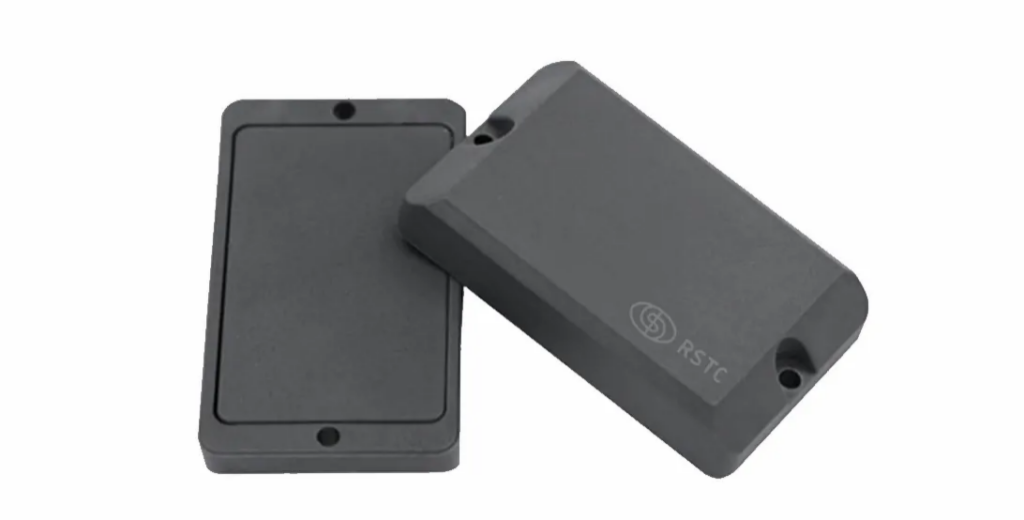
When evaluating the RS-PT07, buyers should confirm its operating-temperature range, maximum survival temperature, read range, mounting method, and exposure duration against the actual process conditions. Applications may include heavy machinery, industrial equipment, mining assets, metal containers, and other assets exposed to demanding environments.
As with any high-temperature tag, the published maximum temperature should be interpreted together with the specified operating conditions and exposure duration rather than treated as a continuous-use rating automatically.
Alternative Industrial PCB Tags for Compact Metal Assets
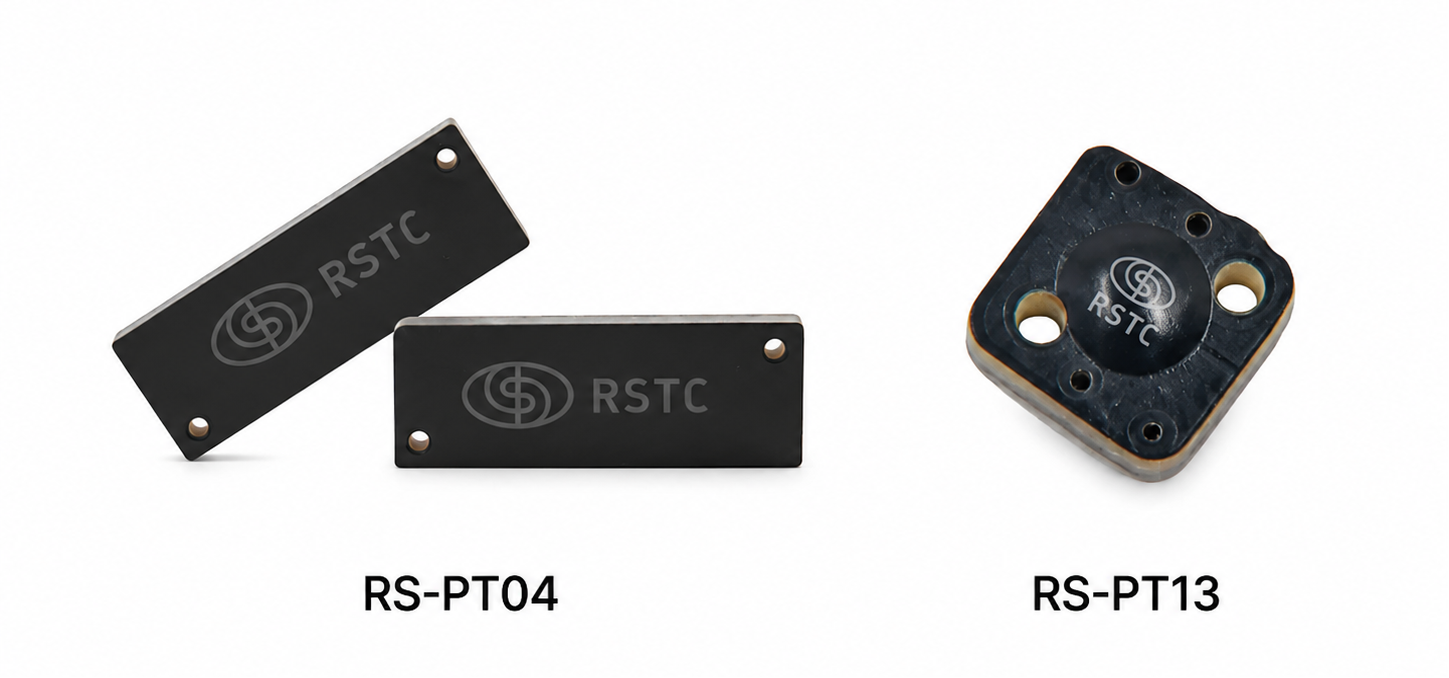
For applications where compact size and on-metal installation are more important than the highest temperature capability, RSTC also offers industrial PCB tag options such as RS-PT04 and RS-PT13.
RS-PT04 is a 36 × 13 × 2.7 mm FR-4 industrial PCB tag for metallic asset management and automotive components, while RS-PT13 is a compact 6 × 6 × 3 mm FR-4 tag for small metallic assets with limited mounting space. Both models list an operating temperature range of −40°C to +85°C, a survival temperature range of −40°C to +150°C, IP68 protection, and EPC Gen2 / ISO 18000-6C compatibility.
The +150°C figure is a survival-temperature specification and should not be interpreted as a continuous operating temperature. Final suitability should be evaluated according to mounting space, metal surface, exposure duration, reader configuration, and actual process conditions.
The main differences are their dimensions, chip configurations, and reading performance. The RS-PT04 uses an NXP Ucode 7 chip, while the RS-PT13 uses an NXP Ucode 8 chip.
Product Selection and Customization Support
Choosing among industrial RFID tags requires matching product specifications with the intended application. We also provide readers, antennas, and related integration support for industrial identification projects.
For projects with uncertain material compatibility, customers can provide workpiece samples for application testing before bulk ordering. Available customization options for relevant models may include logo printing, serial numbers, encoding, and application-specific design adjustments.
Explore our industrial and UHF RFID tag range to compare available models, or contact us to discuss specific project requirements.
Conclusion
A suitable RFID tag must meet the temperature, mounting, and identification requirements of the intended production process. A product’s maximum survival temperature should not be used as a substitute for its operating temperature when assessing suitability for continuous industrial use.
Before placing a bulk order, buyers should:
- Confirm the actual temperature and exposure duration.
- Select a tag compatible with the workpiece material.
- Check reader frequency, protocol, and required read range.
- Test samples under representative production conditions.
- Confirm customization and installation requirements before ordering.
By following these criteria, manufacturers can make more informed purchasing decisions and reduce the risk of installation and compatibility problems.