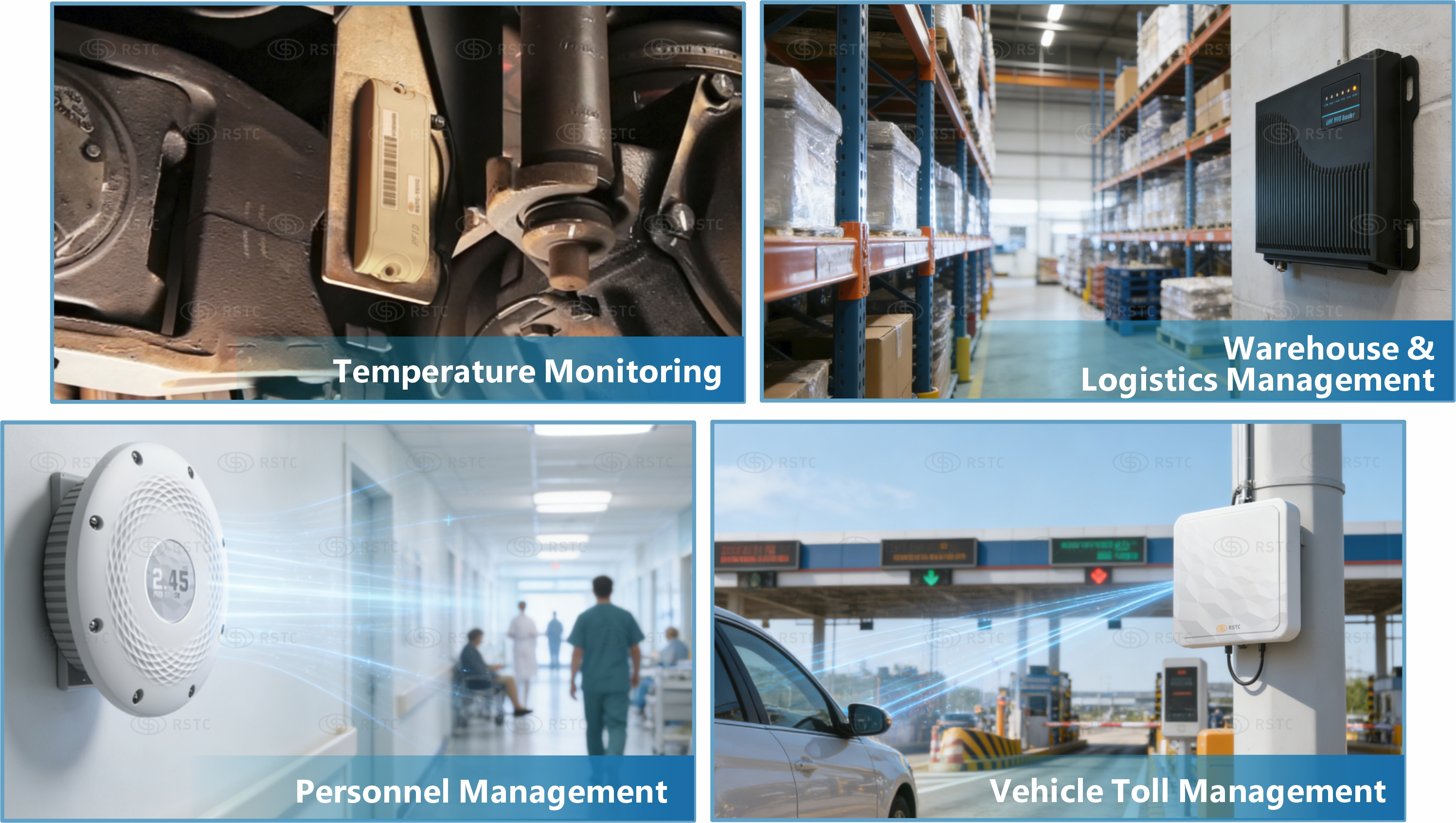
RFID tracking systems are increasingly used within industrial IoT solutions to support automated identification, inventory visibility, production tracking, and asset management. However, deployment results depend on tag selection, reader and antenna configuration, environmental conditions, software integration, and system planning.
This article explains how an RFID tracking system fits into an industrial IoT architecture, the common challenges that may arise during deployment, and the practical measures used to improve system reliability, coverage, integration, and scalability.

What Is an RFID Tracking System in Industrial IoT?
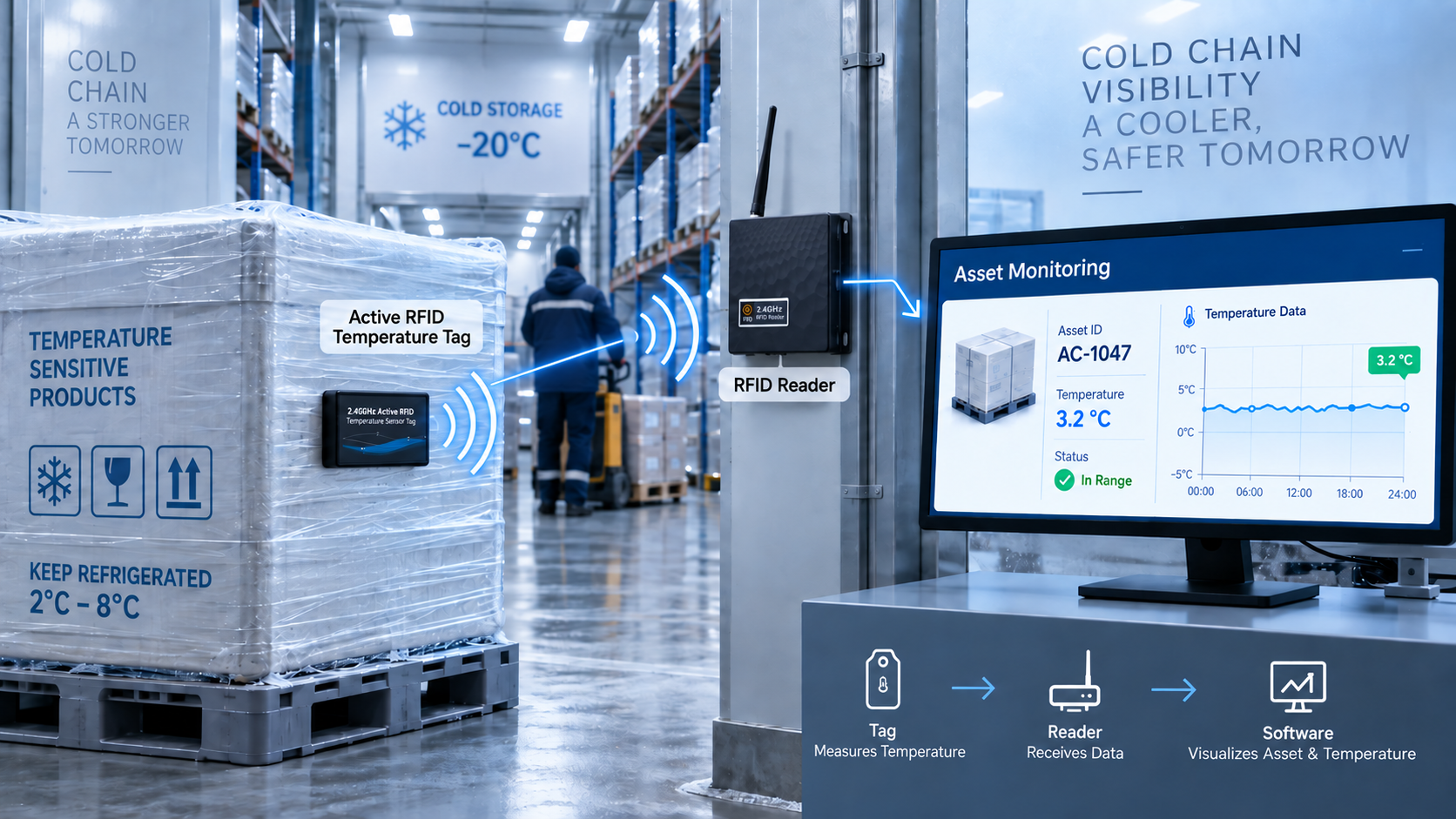
An RFID tracking system uses tags, readers, antennas, and software to identify tagged items and record their movement through defined read zones. It can reduce the need for manual barcode scanning and provide automated data for inventory, production, logistics, and asset-management applications.
Unlike a barcode, an RFID tag does not require direct line-of-sight scanning. A UHF RFID reader can identify multiple tags within a configured read zone, although actual performance depends on reader power, antenna design, tag type, tag orientation, surrounding materials, and radio-frequency interference.
- RFID tags— attached to products, pallets, tools, vehicles, or other assets; passive and active tags serve different range and power requirements.
- Readers and antennas— capture tag data at fixed read points or through handheld scanning.
- Middleware or edge software— filters duplicate or unwanted reads and converts raw tag data into usable events.
- Business systems— WMS, MES, ERP, or industrial IoT platforms use those events for inventory, production, logistics, or asset-management workflows.
Performance problems may originate from any layer of the system, including unsuitable tags, poor antenna placement, reader configuration, middleware rules, or software integration. Troubleshooting should therefore evaluate the complete RFID architecture rather than the reader alone.
How Do RFID Tracking Systems Support Industrial IoT Solutions?
RFID links tagged physical items with digital records by generating identification and movement events at defined read points. When integrated with industrial IoT platforms, WMS, MES, or ERP systems, these events can support inventory visibility, production traceability, material-flow records, and asset-management workflows.
According to Zebra Technologies’ 2023 Global Warehousing Study, 58% of warehouse decision-makers planned to deploy RFID technology by 2028 to improve inventory visibility and reduce out-of-stocks.[1]

What Are the Most Common Challenges in Industrial RFID Deployments?
Common industrial RFID deployment challenges include interference from metal and liquids, reader interference and high tag density, harsh operating conditions, incomplete read-zone coverage, and integration gaps with existing software platforms.
Challenge 1: Interference from Metal and Liquids
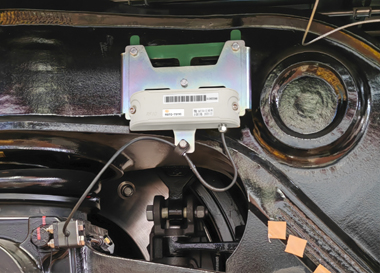
Metal can reflect and detune UHF RFID signals, while liquids can absorb radio-frequency energy. These effects may reduce read range, create blind spots, or make tag performance inconsistent.[2]
This happens because a standard passive tag placed directly on a steel surface gets detuned by the metal underneath it, and a tag near liquid-filled containers loses signal strength as radio waves pass through the liquid.
Practical solution: Use on-metal tags or tags designed for liquid-related applications, adjust tag spacing and orientation, reposition antennas, and test the actual materials before full deployment. Increasing reader power alone may not solve a tag or placement problem.
Challenge 2: Reader Interference and High Tag Density
Dense deployments may contain many tags within one read zone or several readers operating nearby. High tag density can increase identification time, while overlapping reader fields may create interference or unwanted reads between adjacent zones.
Practical solution: Adjust reader power, antenna placement, channel or frequency settings, reading sessions, and trigger timing. Middleware should also filter duplicate and unrelated reads before sending events to business systems.
Challenge 3: Harsh Industrial Environments Affect Hardware Reliability
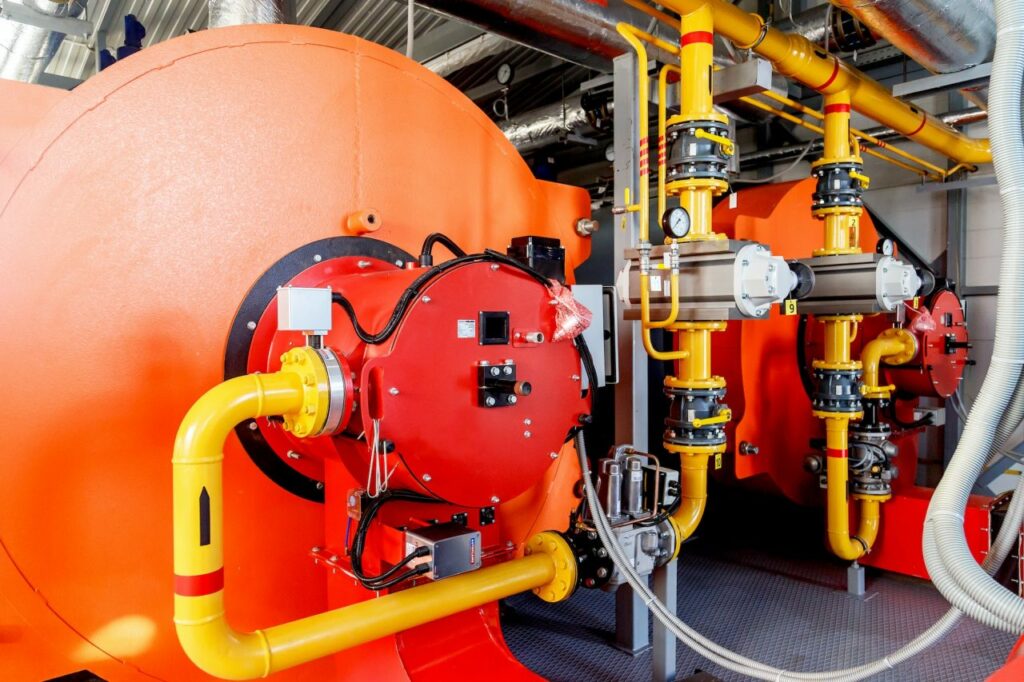
Industrial readers and tags may be exposed to dust, moisture, temperature changes, vibration, condensation, and electrical interference. Equipment specifications should therefore match the actual installation environment.
Hardware degradation, unstable power, or damaged connectors can create missed events even when the rest of the software system continues operating. Environmental protection and installation quality should therefore be checked during system design and maintenance.
Requirement | What to Check | Why It Matters |
Operating temperature | Confirm that the rated range covers the expected site conditions with an appropriate safety margin | Temperatures outside the specified range may affect performance and service life |
Ingress protection (IP rating) | Select the IP rating according to dust, moisture, cleaning, and outdoor exposure requirements | Additional protection may be required in wet, dusty, or exposed locations |
Electrical Environment | Check grounding, cable routing, applicable EMC requirements, and proximity to motors or inverters | Electrical interference may affect communication or reading stability |
Power Supply | Confirm the available input voltage, connector type, and installation method | The reader must match the power conditions available at the installation point |
Challenge 4: Incomplete Read-Zone Coverage in Large Facilities
Large facilities often contain wide doors, multiple lanes, production stations, racks, or vehicle access points that may require several controlled read zones. Coverage problems may also result from tag orientation, surrounding metal, antenna placement, or excessive distance between the tag and antenna.
Practical solution: Divide the facility into defined read zones and select the reader, antenna type, port count, and installation position for each zone. Wide openings or nearby zones may benefit from multi-port readers, while separate readers may be more suitable when zones need independent timing or control.
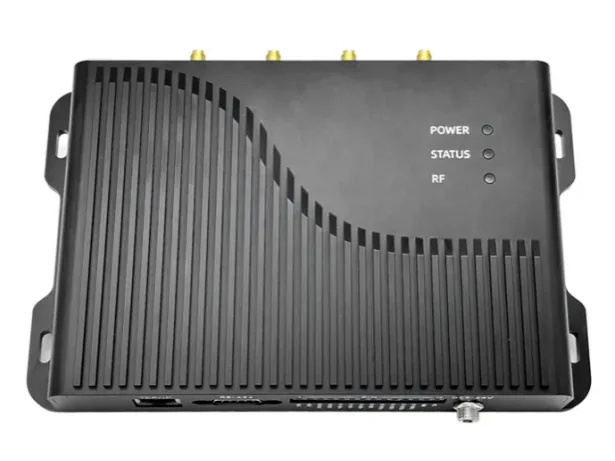
For projects that require several external antennas from one reader, the RSTC RS-F905 Four-Port UHF RFID Reader may be considered. It supports multiple antenna connections and communication interfaces for applications such as dock doors, production stations, and access points. Actual coverage should be verified using the intended tags and installation environment.
Challenge 5: Integration Gaps with ERP, WMS, MES, and Industrial IoT Platforms
RFID hardware generates raw identification events, but those events must be filtered, mapped, and transferred into WMS, MES, ERP, or industrial IoT platforms. Differences in interfaces, protocols, data formats, and business rules can delay integration.
Raw reader data may contain duplicate, incomplete, or unwanted reads, so middleware or edge software is often used to filter and convert tag data into useful business events.
Practical solution: Confirm SDK or API availability, supported interfaces, data formats, middleware compatibility, event rules, and field mapping before full deployment. Integration should be tested with the actual WMS, MES, ERP, or IoT platform rather than evaluated from hardware specifications alone.
How Does Automated RFID Tracking Differ from Manual Tracking?
Manual tracking requires operators to scan or record items individually, while automated RFID systems generate events when tagged items pass through configured read zones. The main differences relate to operator involvement, data frequency, coverage, and system integration.
Factor | Manual Tracking | Automated RFID Tracking |
Data Collection | Operator scans or records items individually | Reader captures tagged items at configured read points |
Operator Involvement | Required for each scan or count | Mainly required for exceptions, audits, or maintenance |
Data Timing | Updated during scheduled counts or scans | Events generated when items enter the read zone |
System Integration | Data may require manual entry or upload | Reader or middleware can send events to business software |
How Do You Choose RFID Hardware for Industrial IoT Solutions?
RFID hardware should be selected according to the workflow, read-zone layout, tag type, environmental conditions, and integration requirements. The highest-spec reader is not automatically the most suitable choice.
Fixed vs. Handheld Readers
Factor | Fixed Reader | Handheld Reader |
Workflow | Continuous or event-triggered reading at defined locations | Operator-controlled mobile scanning |
Typical Use | Dock doors, production lines, gates | Inventory counts, asset audits, receiving |
Integration | Connected to network, controller, or middleware | Data captured through a mobile application and synchronized with the system |
Single-Port vs. Multi-Port RFID Readers
A single-port reader is suitable for a focused read point using one external antenna. A multi-port reader can manage several antennas around a wider opening or multiple nearby read points. The appropriate configuration depends on antenna cable length, reading sequence, zone separation, and whether the zones need independent control.
For more detailed guidance, see our UHF RFID reader selection guide.
How Do You Secure Data in an Industrial RFID Tracking System?
Securing an RFID tracking system requires protecting tag data, reader access, network communication, middleware, APIs, databases, and connected business systems. Security should be designed across the complete architecture rather than applied only to the reader hardware.
Common security measures include network segmentation, strong access control, secure API configuration, audit logs, firmware management, password policies, and limiting unnecessary network exposure.[3] Available security functions depend on the reader, middleware, network architecture, and application platform.
Conclusion: Building Reliable Industrial IoT Solutions with RFID Tracking Systems
Reliable industrial IoT solutions require the RFID tags, readers, antennas, middleware, interfaces, and software integration to be planned as one system. Deployment decisions should be based on the workflow, read-zone layout, tagged materials, operating environment, data requirements, and future expansion needs.
For applications requiring several external antennas and defined read points, the RSTC RS-F905 Four-Port UHF RFID Reader may be a suitable hardware option. RSTC can also help evaluate reader, antenna, tag, interface, and installation requirements based on the actual materials, workflow, and system environment.