A UHF RFID reader is a key component of an automated identification and tracking system. It communicates with UHF RFID tags through connected antennas and sends collected data to software platforms used in warehouses, factories, logistics facilities, and other industrial environments.
Selecting a reader that matches the application, antennas, tags, installation layout, and system requirements helps reduce missed reads, coverage problems, unnecessary hardware costs, and future integration difficulties. This guide covers reader type, read range, antenna ports, communication interfaces, operating conditions, and common industrial applications.
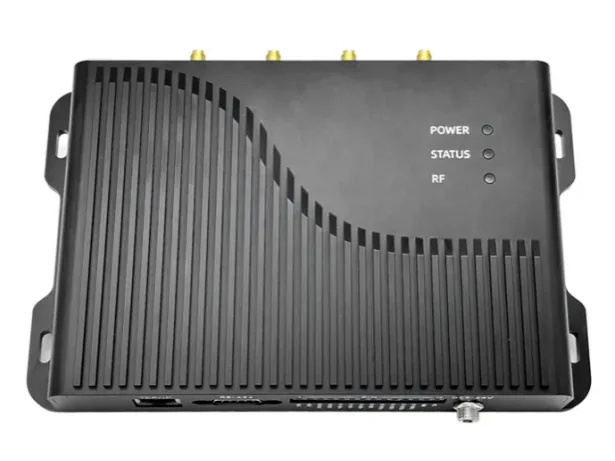
What Is a UHF RFID Reader and How Does It Work?
A UHF RFID reader communicates with UHF RFID tags through radio waves, allowing tag data to be captured without direct contact or line-of-sight scanning.
How Does a UHF RFID Reader Work?
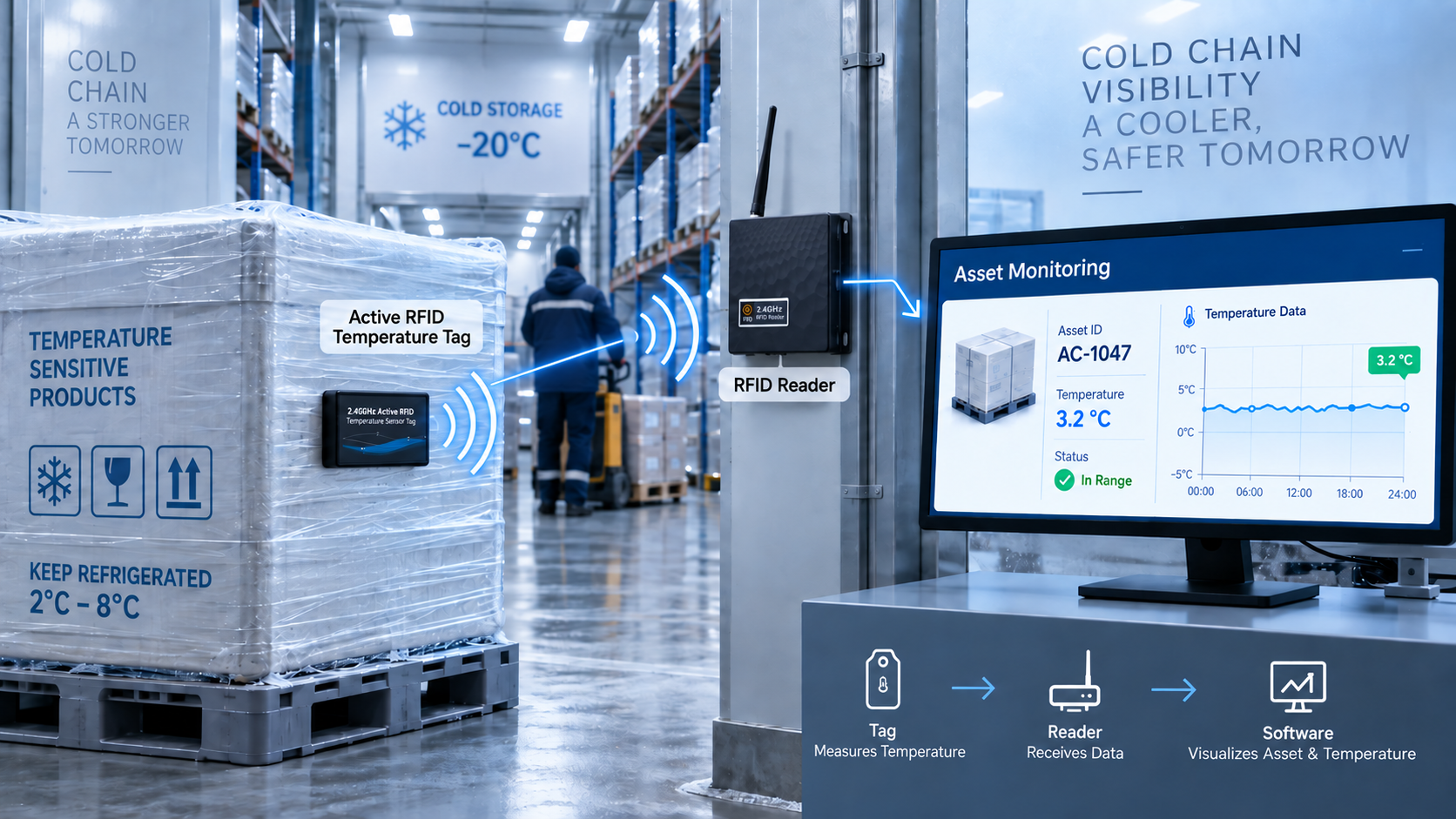
A UHF RFID reader sends radio-frequency energy through one or more connected antennas. When a passive UHF RFID tag enters the read zone, it uses energy from the signal to power its chip and returns stored data through backscatter communication.
The reader decodes the response and sends the data to an edge device, middleware platform, or application system, where it can be integrated with a WMS, MES, or ERP platform. Because the process does not require direct line-of-sight scanning, UHF RFID is well suited to bulk identification and fast-moving inventory.
UHF RFID Frequency Bands
UHF RFID systems typically operate within the 860–960 MHz range, but the permitted frequency band varies by country and region. Common examples include 902–928 MHz in North America and 865–868 MHz in Europe. Before deployment, the reader and antenna configuration should be selected according to the regulations of the target market.
Compared with LF and HF RFID, UHF RFID generally supports longer read distances, faster bulk identification, and the simultaneous reading of multiple tags. These characteristics make it widely used in warehouses, manufacturing facilities, logistics operations, and asset-tracking applications.
Fixed vs. Handheld RFID Readers
The choice between a fixed RFID reader and a handheld RFID reader depends mainly on whether the workflow requires continuous automated reading or flexible operator-controlled scanning. Installation location, coverage requirements, and system integration should also be considered.
Feature | Fixed RFID Reader | Handheld RFID Reader |
Installation | Mounted at a fixed location | Carried and operated by personnel |
Reading Method | Continuous or event-triggered automatic reading | Operator-controlled mobile reading |
Coverage | Configurable read zone using one or more antennas | Flexible coverage based on operator movement |
Throughput | Suitable for high-volume and unattended workflows | Suitable for targeted or periodic scanning |
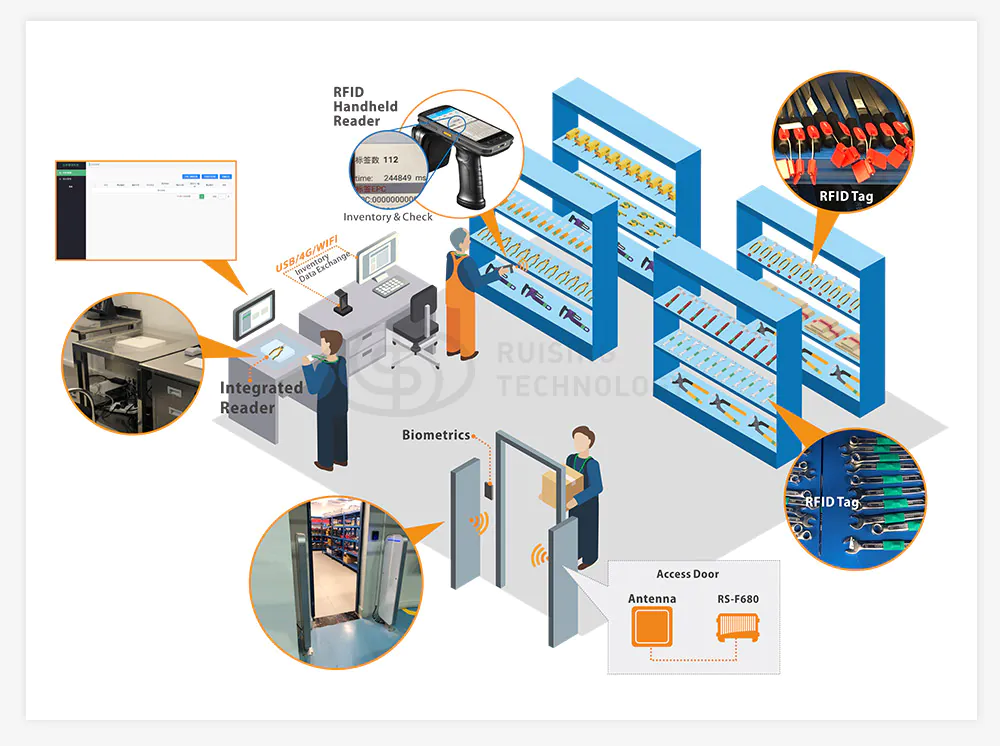
Typical Applications | Dock doors, conveyor lines, production stations, access points | Inventory counts, asset audits, receiving, maintenance and field service |
Why Is Choosing the Right UHF RFID Reader Important?
Reader selection affects the coverage, reliability, integration, and scalability of an RFID system. A reader that does not match the application, antenna layout, tag type, or operating environment may cause recurring problems after deployment. Common issues include:
- Missed reads — tags pass through the intended read zone without being captured because of antenna placement, tag orientation, surrounding materials, signal settings, or interference.
- Unwanted reads — tags outside the intended zone are detected, creating duplicate or incorrect inventory events.
- Incomplete coverage — blind spots remain around wide doors, racks, conveyors, or irregularly shaped areas.
- Limited scalability — insufficient antenna ports, communication interfaces, or software compatibility make future expansion more difficult.
These problems often result from a mismatch between the reader, antennas, tags, installation layout, software settings, and workflow. The complete RFID system should therefore be evaluated instead of comparing reader prices or individual specifications alone.
What Should You Consider When Choosing a UHF RFID Reader?
Choosing a UHF RFID reader requires matching the hardware configuration to the read zone, tag type, workflow, operating environment, and existing system architecture. The following factors should be evaluated before selecting a reader.
What UHF RFID Read Range Do You Need?
The required read range depends on the size of the read zone, tag type, antenna configuration, installation layout, and surrounding environment. There is no single optimal distance for every RFID application.
Short-range configurations are often used at check-in stations, workbenches, or other controlled read points where nearby tags should not be detected. Wider portals, dock doors, vehicle access points, and open-area applications may require longer-range configurations or multiple antennas. Under suitable conditions, certain industrial readers can support reading distances of up to 20–25 meters, but this should be treated as a maximum performance value rather than a guaranteed operating distance.
Actual read distance is affected by reader output power, antenna gain, cable loss, tag sensitivity, tag orientation, attachment material, nearby metal or liquids, and interference from other radio-frequency equipment. Local regulations may also limit the permitted frequency and transmission power.
Actual performance should be verified with the tags, materials, and installation environment used in the project.
How Many Antenna Ports Should You Choose?
The number of antenna ports determines how many external antennas can be connected to a reader and influences how many angles or read zones one device can support.
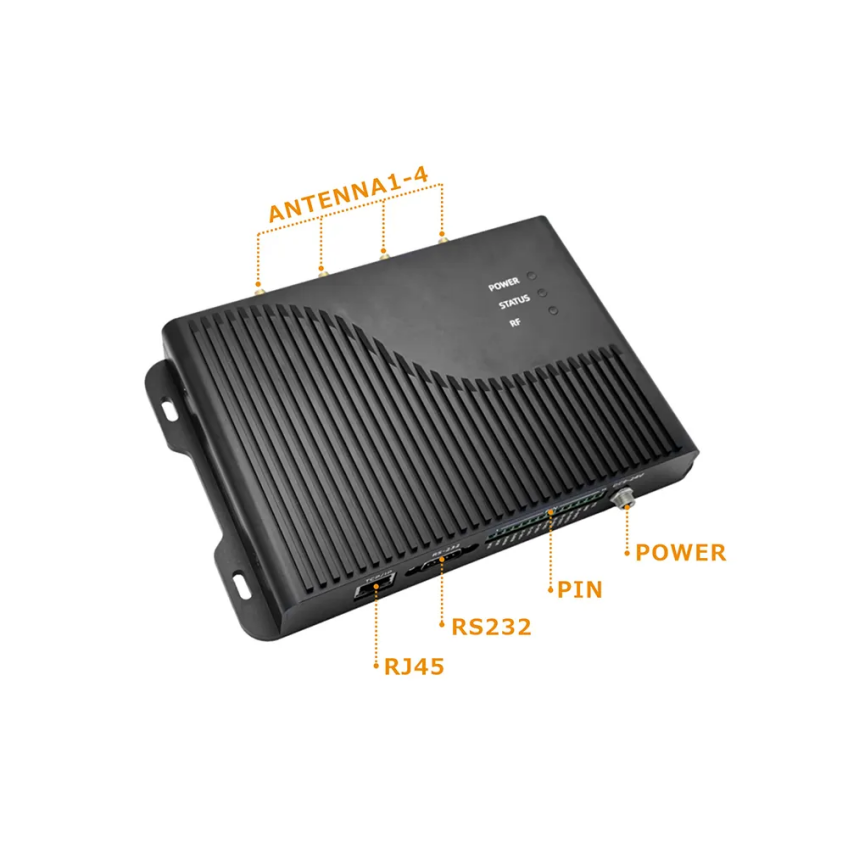
A one-port reader is suitable for focused read points such as workbenches, compact conveyors, access points, or equipment-integrated applications. A four-port reader can manage up to four antennas to cover wider openings, read from several directions, support nearby zones, or reduce blind spots.
A multi-port reader may reduce the number of reader units, network connections, and power supplies required. However, the appropriate port count still depends on antenna cable length, tag volume, reading sequence, zone separation, installation layout, and whether the zones need to operate independently.
Which Communication Interfaces Should You Choose?
Communication interfaces affect how the reader connects to computers, controllers, networks, and application systems. The required interfaces should be selected according to the existing system architecture and installation environment.
- Ethernet (RJ45) — commonly used for stable network communication with industrial PCs, edge devices, middleware servers, or local application systems.
- RS232 — commonly used for short-distance serial communication with a computer, controller, or embedded device.
- RS485 — suitable for longer cable runs and industrial communication environments where stronger noise resistance or multi-device connections may be required.
- Wi-Fi — useful where network cabling is difficult or where installation flexibility is required, although signal stability, network security, and local interference should be evaluated.
The reader should support the interfaces and protocols required by the current system and planned expansion. SDK, API, data format, middleware, and control-software compatibility should also be confirmed.
Can the Reader Handle Industrial Environments?
Industrial RFID readers may be exposed to dust, moisture, temperature changes, vibration, electrical noise, and outdoor conditions. Environmental specifications should therefore be evaluated according to the intended installation location.
Key specifications to check include:
- IP Rating — IP54 provides limited protection against dust ingress and splashing water. Outdoor, washdown, or heavily contaminated environments may require a higher rating or protective enclosure.
- Temperature Range — the operating range should match the installation environment, including possible condensation, rapid temperature changes, or direct sunlight.
- Installation Conditions — vibration, mounting stability, power supply, grounding, cable routing, and nearby motors or inverters should also be evaluated.
For example, the RSTC RS-F905 Four-Port UHF RFID Reader is specified with an IP54 rating and an operating temperature range of -20°C to +60°C. These specifications make it suitable for many indoor industrial and warehouse environments, provided that the actual installation conditions remain within the stated limits. Outdoor or high-moisture installations may require an additional protective enclosure.
Common Industrial Applications of UHF RFID Readers
UHF RFID readers are used in industrial workflows that require fast, contactless, or automated identification. The appropriate reader type, antenna layout, tag, and software configuration depend on the movement of the items, the required read zone, and the surrounding materials.
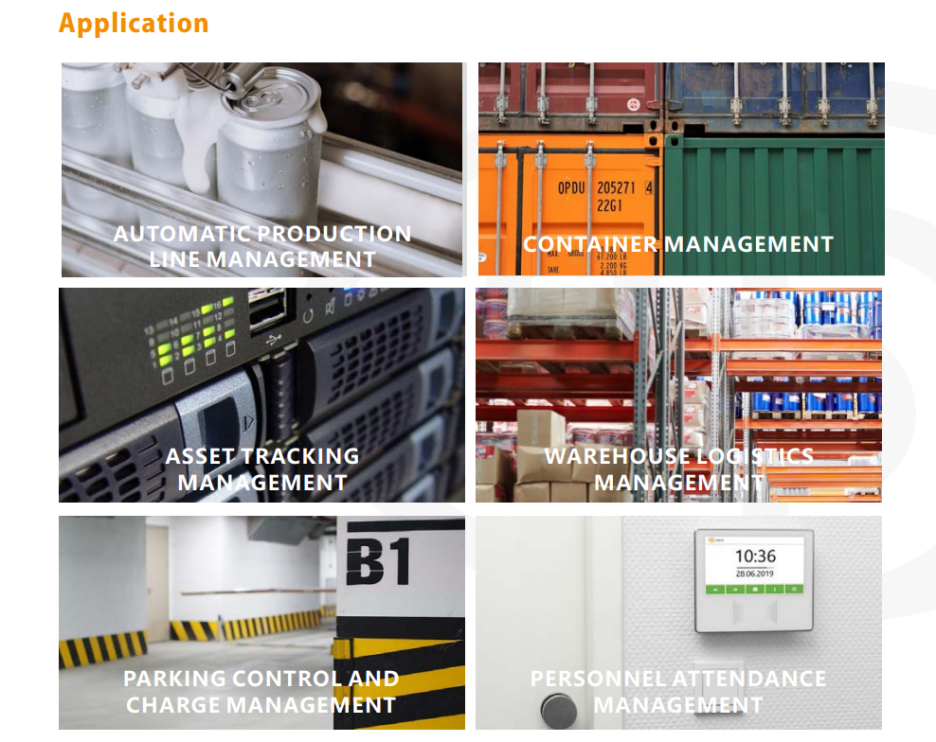
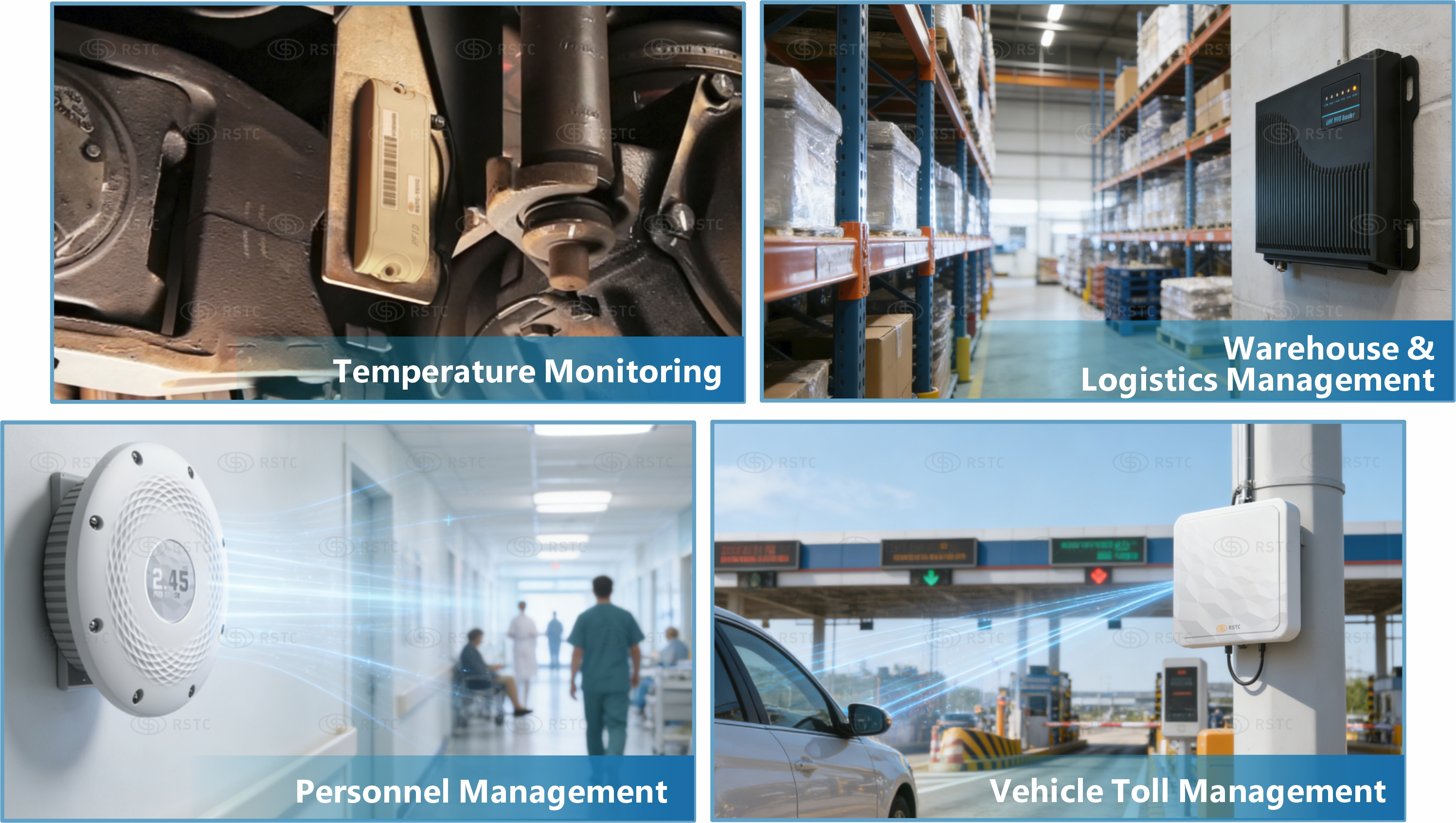
- Warehouse and Inventory Management — fixed readers can be installed at dock doors, conveyors, or defined transfer points to capture tagged pallets, cartons, or assets as they move through the facility. Handheld readers can support cycle counts, item searches, and exception handling. The collected data can be integrated with a WMS or inventory platform to support receiving, movement records, and shipping verification.
- Manufacturing and Production Lines — fixed readers installed at workstations, conveyors, or production gates can capture tagged components, tools, carriers, or work-in-progress items at defined process points. When integrated with an MES, PLC, or production application, the data can support process tracking, material verification, assembly records, and product traceability.
- Logistics and Transportation — fixed readers can be deployed at dock doors, loading areas, gates, and transfer points to record the movement of properly tagged pallets, containers, vehicles, or reusable transport items. The data can support check-in and check-out records, shipment verification, and movement visibility across logistics operations.
- Asset Tracking and Equipment Management — fixed readers can record when tagged tools, equipment, or IT assets enter or leave defined areas, while handheld readers can support audits and targeted asset searches. This combination is suitable for facilities that need identification and movement records without continuous precise location tracking.
- Vehicle and Access Management — long-range UHF RFID readers can identify authorized vehicle tags at entrances, parking areas, or controlled gates. The reader may be integrated with barriers, access controllers, cameras, or management software, depending on the project requirements.
Conclusion
Choosing a UHF RFID reader requires matching the reader, antennas, tags, interfaces, and environmental specifications to the actual read zone and workflow. Because performance varies with materials and installation conditions, the final configuration should be verified through testing before deployment.
For projects that require multiple external antennas and coverage across several nearby read points, the RSTC RS-F905 Four-Port UHF RFID Reader may be a suitable option. It supports up to four antennas and is designed for applications such as warehouse portals, production stations, asset tracking, and access management. RSTC can also help evaluate reader, antenna, tag, and interface requirements based on the actual materials, workflow, and installation environment.