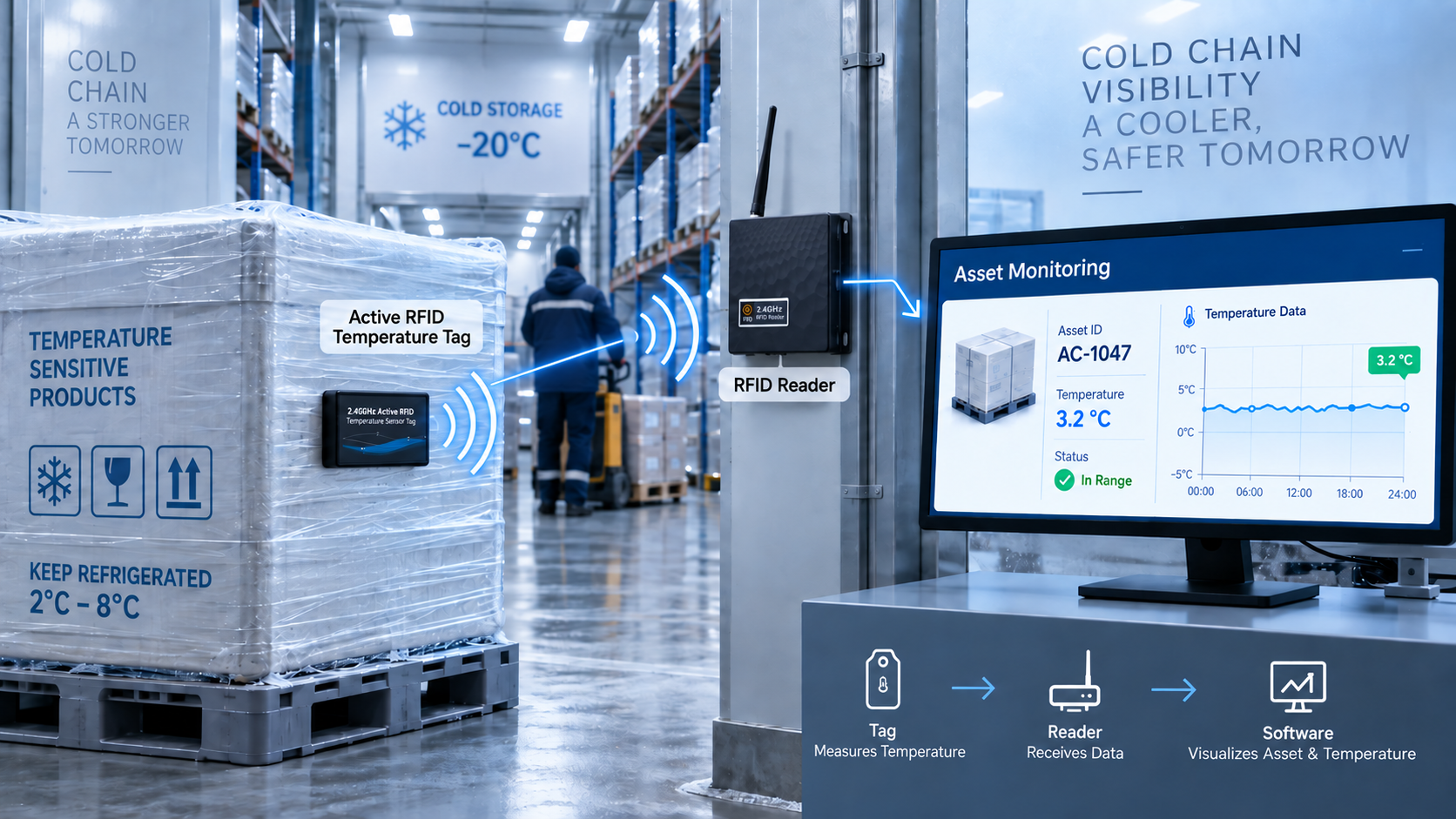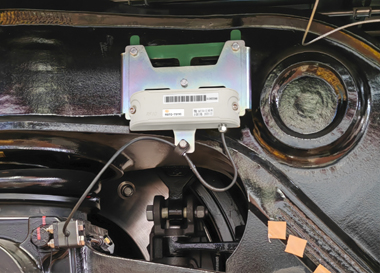
Deploying RFID in a warehouse involves more than mounting readers and attaching tags. A reliable RFID warehouse management system must connect identification hardware with warehouse processes, software, and the physical environment. Reader position, antenna orientation, tag placement, RF coverage, and data integration can all affect results. A practical deployment should begin with a defined use case and baseline, continue through controlled installation and field testing, and end with validation against actual receiving, storage, inventory, and shipping workflows.

Planning an RFID Warehouse Deployment
Before installing RFID hardware, warehouse operators should first define the process to be improved, the event to be captured, and how the resulting data will be used. Clear planning helps align reader placement, tag selection, system integration, and testing with actual warehouse operations.
Define the Warehouse Process Before Selecting Hardware
An RFID warehouse deployment should be planned around the business event it needs to capture, rather than around the reader alone. Hardware, software, data flows, and warehouse processes must work together so that a tag read can be translated into a meaningful receiving, storage, inventory, picking, or shipping event.
Products containing metal or liquids, as well as different packaging and pallet configurations, should be included in pre-deployment tag-placement tests because these factors can affect read performance.
Before installation, define what event the RFID system should detect and what information the warehouse system should receive. For example, a dock-door deployment might need to associate a pallet ID with a receiving transaction, rather than simply record that a tag passed an antenna.
A practical planning checklist includes:
- Map the existing receiving, storage, picking, and shipping workflows.
- Define measurable baseline KPIs such as processing time, manual scanning steps, or exception frequency.
- Identify where RFID data must enter the warehouse or enterprise system.
- Test tags against representative products, packaging, metal, liquids, and operating conditions.
- Define the expected RFID event at each read point and the action the WMS should take.
Which Warehouse Processes Should RFID Cover First?
Start with a warehouse process where automated identification addresses a clearly defined operational problem, such as receiving at dock doors, pallet movement, inventory verification, or outbound shipping. A practical RFID deployment should begin by identifying a clear use case, establishing baseline performance, evaluating tag placement, and testing the selected application in the actual warehouse environment before broader deployment.
Warehouse Process | Typical RFID Event | Deployment Focus |
Receiving | Pallet or carton enters receiving zone | Match tag data with PO or ASN |
Put-away | Tagged goods move to storage | Confirm item-location association |
Inventory | Tags are counted or verified | Coverage and exception handling |
Picking | Tagged item or pallet is removed from storage | Verify the correct item or pallet was picked |
Shipping | Goods pass outbound gate | Match tags with shipment order |
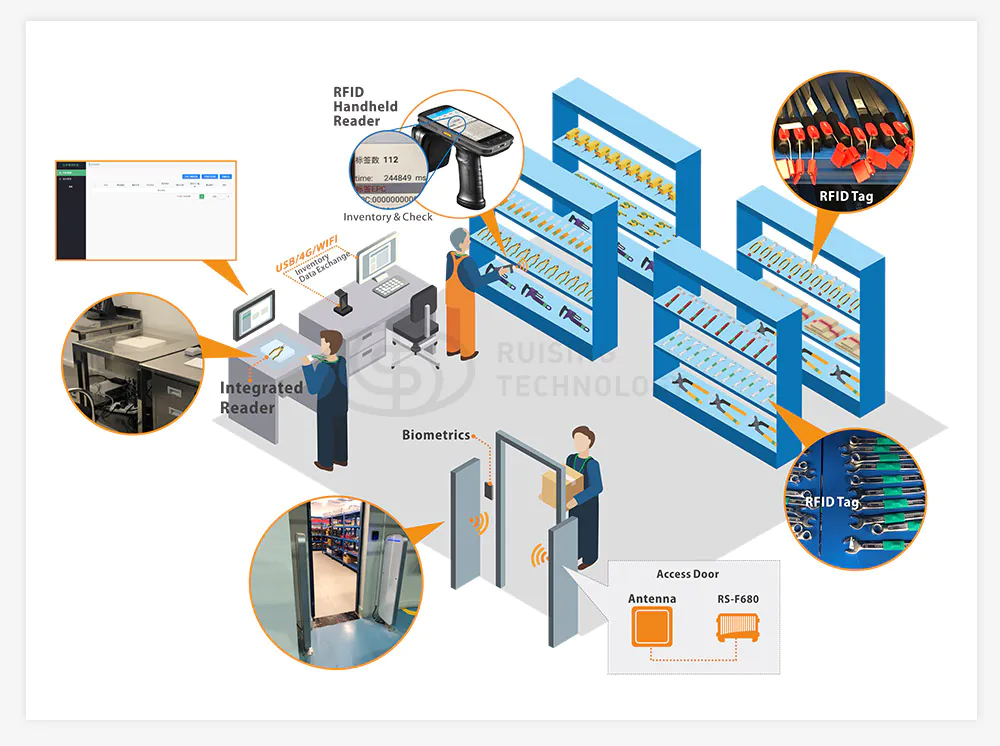
This approach also limits deployment risk. A warehouse can first test one reading point, establish success criteria, and compare the RFID-enabled workflow with the original process before expanding the infrastructure. For a practical example of RFID-based warehouse asset management, explore RSTC’s Warehouse Tools Management case study.
Setting Up RFID for Warehouse Operations
After the deployment plan is defined, RFID hardware and system connections should be configured around the intended warehouse workflow. The goal is to create controlled read zones and reliable data flows that support actual warehouse transactions.
Designing Controlled RFID Read Zones
Reader and antenna configuration should be based on the intended read zone rather than maximum theoretical range. Antenna position, reader power, surrounding structures, and tag orientation should be adjusted so that required tags are detected while unrelated tags remain outside the zone.
For a fixed reading point, define the physical area in which a tag should be detected. Then adjust antenna placement and reader power through testing. Excessive coverage can create unwanted reads from adjacent pallets, shelves, or workers, while insufficient coverage can produce missed reads. The objective is therefore controlled coverage, not simply the longest possible reading distance. At a dock door, the read zone should capture tagged pallets passing through the intended lane without consistently detecting pallets staged at an adjacent door.
Connecting RFID Events to the WMS
RFID data should follow a defined flow from the reader to the WMS so that raw tag reads can be translated into valid warehouse transactions. RFID can support warehouse operations such as receiving, inventory, storage, packing, and shipping, while standardized identification can help warehouse systems and supply-chain partners exchange information consistently.
A typical deployment should define:
- Capture: Reader detects EPC.
- Filtering: Remove duplicate or unrelated reads.
- Association: Associate EPC with carton, pallet, item, location, PO, ASN, or shipment.
- Validation: Check whether the detected movement matches the expected warehouse
- Action: Record the transaction in the WMS or generate an exception.
This separation is important because raw RFID reads are not automatically equivalent to confirmed inventory transactions.
Example Hardware Configuration for Fixed Warehouse Read Points
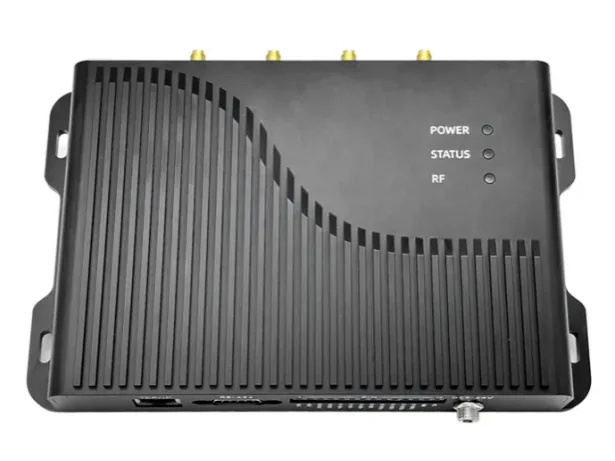
For fixed warehouse read points, the RSTC RS-F905 Four-Port UHF RFID Reader provides four external antenna ports, adjustable RF output, and multiple communication interfaces for integration with warehouse automation systems.
The final interface and I/O configuration should be selected according to the WMS, middleware, controller, and network architecture.
Feature | Warehouse Relevance |
4 antenna ports | Allows several antennas around a defined read point |
Adjustable RF output | Helps tune coverage and reduce unwanted reads |
RJ45 / RS232 / RS485 | Supports network and controller integration |
Digital I/O / relay | Can connect with sensors, gates, or indicators |
Reader selection also depends on read range, antenna configuration, interfaces, and operating conditions. For more detailed guidance, see our UHF RFID reader selection guide.
How Should You Pilot an RFID Warehouse Management System?
A pilot should test one representative warehouse workflow before the system is expanded across multiple zones or facilities. The test should use the actual tags, products, packaging, antennas, reader settings, and movement patterns expected after deployment.
During the pilot, evaluate both normal transactions and exception cases. For example, test whether the system detects the correct pallet at a receiving door, avoids reading pallets staged nearby, and records the expected transaction in the WMS.
Before scaling, define measurable success criteria such as acceptable missed-read rates, unwanted-read frequency, transaction accuracy, processing time, and exception-handling requirements. The system should only be expanded after the pilot meets the agreed operational and integration criteria.
Avoiding Common RFID Warehouse Deployment Mistakes
The most preventable RFID problems usually come from mismatches between tags, products, reader coverage, and operational workflows rather than from the reader specification alone.
- Poor Tag Placement
Tag placement directly affects UHF RFID performance. A tag that works on a test carton may behave differently when attached to metal, placed near liquid-filled products, or positioned differently on a pallet. Tag location and orientation should therefore be tested with representative products, packaging, and pallet configurations before deployment.
- Uncontrolled Read Zones
Excessive RF coverage can capture tags from adjacent pallets, shelves, staging areas, or neighboring dock doors. Insufficient coverage can create missed reads within the intended transaction area. Reader power and antenna placement should be adjusted so that the read zone matches the physical workflow rather than simply maximizing range.
- Skipping Pre-Deployment Tests
Laboratory performance does not reproduce every warehouse condition. A pilot should use the actual tags, products, antennas, reader settings, and operating movements expected after deployment. Field testing should also include exception cases, not only ideal operating conditions.
- Failing to Validate WMS Transactions
Capturing a tag does not automatically prove that a receiving, shipping, or inventory transaction occurred correctly. The system should verify what was expected to move, what was detected, when it was detected, and how the event was recorded in the WMS. Exceptions should be reviewed before deployment is expanded.
- Scaling Before the Pilot Is Stable
Expanding RFID infrastructure across multiple docks, zones, or facilities before the pilot meets defined success criteria can multiply configuration and integration problems. Scale the deployment only after the initial workflow has been validated under normal and exception conditions.
Conclusion
A successful RFID warehouse deployment starts with process definition, controlled read-zone design, WMS validation, and field testing—not hardware installation alone. The system should be scaled only after the pilot demonstrates reliable reading and transaction accuracy under actual warehouse conditions. RSTC supports warehouse and logistics RFID projects with RFID hardware, application testing, integration support, and customized solutions based on specific operational and deployment requirements.
References
[1] GS1 US. RFID Use in Warehouse Management. Available at: https://www.supplychain.gs1us.org/rfid/warehouse-management
[2] GS1. Implementation Guide for the Use of GS1 EPCglobal Standards in the Consumer Electronics Supply Chain. Available at: https://www.gs1.org/sites/default/files/docs/epc/Implementation_Guide_for_the_use_of_GS1_EPCglobal_Standards_in_the_Consumer_Electronics_Supply_Chain_-_May_2010.pdf